

In a world filled with so much information, investors have become more knowledgeable and aware of their investment choices. With so many options available, investment decisions are increasingly being driven by personal beliefs and values. While investors continue to seek high returns, low fees and tax-efficient solutions, there is a significant trend towards social responsibility and ethical investing. This new wave of investing known as ESG investing, is rapidly growing and evolving, providing investors new alternatives they never had before. So what exactly is Environmental, Social and Governance (ESG) investing? Allow us to break it down for you:
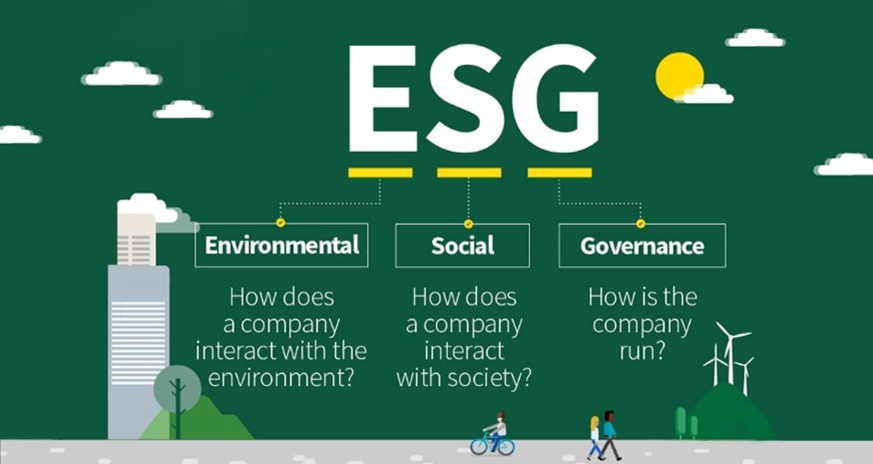
What is ESG Investing?
Environmental, Social and Governance investing refers to a set of standards that a company follows that socially responsible investors screen. ESG investing is seen as a way of investing “sustainably” where investment decisions are made based on the environment and human wellbeing, without neglecting economic trends. While ESG investing is not new, its recent rise in popularity has forced investment firms and managers to rethink their investment philosophy and offering. As a result, the number of ESG options available has never been greater. Before getting into the investment options, lets further understand ESG investing and its elements:
ESG Criteria
1. Environmental: The ‘’E’’ in ESG is driven by the impact a company has on the natural environment. This can include a company’s carbon footprint, water and air pollution, the use of toxic chemicals in its production/processes, waste management, water scarcity and its efforts towards sustainability throughout its entire supply chain.
2. Social: The ‘’S’’ in ESG investing is driven by the social factors of how a specific company manages its relationships within its own organization, suppliers, customers, and the community in which it operates. Factors such as community relations, inclusion, data protection and privacy,
diversity, employee engagement, human rights and labour standards dictate the ‘’S’’ in ESG.
3. Governance: The ‘’G’’ in ESG investing is driven by quality and how reasonable a company’s leadership team & board member’s desire to drive positive change. Factors such as executive pay, diversity among leadership, bribery and corruption history and how those same leaders interact with its shareholders and stakeholders determine the “G” in ESG.
ESG Options:
As ESG investing becomes more of a reality, the choice for consumers has never been better. Fund companies, portfolio managers and financial institutions across the world are allocating more resources towards adding more ESG products and solutions. So how can one start to invest in more ESG and ethical products? Consider the following:
1. Mutual Funds: Just like traditional mutual funds, ESG funds will form a pool of stocks, bonds and other securities to offer to retail investors. However, ESG targeted funds and their underlying securities must meet the criteria set out by ESG guidelines. Contrary to popular belief, these funds do not underperform and can be a great addition to any portfolio.
2. ETF’S: Like a mutual fund, an ETF pools various securities to create a fund available to investors. While ETF’s do not carry the same level of active management, their low fees have made them quite attractive. Recently there has a surge in demand for ESG accredited ETF’s, making them more readily available for all investors
3. Alternative ESG Investments: While alternative investments are nothing new, they have often been looked as “private investments” for select individuals & institutions. Investments in real estate, commodities, infrastructure, private equity, private debt etc. have seen a sharp rise in demand. In a sector that is traditionally less regulated, estimates state that about 42% of alternative assets are now managed by funds that have an active ESG policy, a number that is surely to rise with time.
How can I start investing sustainably?
While the definition of investing sustainably might mean different things to different people, the importance is to identify whether this is important to you as an investor. If the answer is yes, here are a few ways to consider adopting this approach into your portfolio:
1. ESG Integration: While it may not be possible to fully adopt an ESG investment strategy, the best way is to start integrating slowly and gradually. You can start by looking into or asking advisors to assess the financial risks of environmental, social and governance factors to the companies they are considering investing in.
2. Negative Screening: Sometimes known as ‘’traditional’ ethical investing, this approach is about avoiding or excluding companies that are doing things that are considered questionable, things like weapons manufacturing and trading, tobacco sales, the publication of pornography, the extraction of fossil fuels. Where you draw the line on this list is a matter of personal values and beliefs.
3. Positive or Best in Class Screening: The opposite of point # 2, best-in-class screening involves looking for companies that score well on environmental, social or governance factors. In general, these companies understand the forces that shape the world around them and respond appropriately in turn making them better companies.
Impact Investing: Impact investing targets those investors who see their money as a way to create a better world. As the name suggests, it includes funds that invest in companies that are targeting social and environmental improvements. It might, for example, include investments in social housing or businesses that are trying to create jobs for.

As the demand for ESG investments continues to grow, there is no shortage of options available to investors. Whether you wish to build your portfolio completely around ESG holdings, or just want to add a small percentage to your current investments, contact your Oberoi Financial Group advisor to see the options best suited for you. With a growing shelf of available investments in both traditional and non- traditional sectors, we will help you reach your financial goals.